
The Atlantic coast from Biscay to Gibraltar tests every stow.
Swell builds fast. One low follows another. And the weather finds the weak point in a lashing plan that looked fine in port.
Two recent cases are on the public record. In March 2025, MSC Houston V lost between 15 and 20 containers in storm Martinho off Cape St Vincent, according to Salvamento Marítimo as reported in the press, and diverted to Vigo. In January 2026, Maria Francisca lost containers off Aveiro in heavy swell, and also took shelter in Vigo.
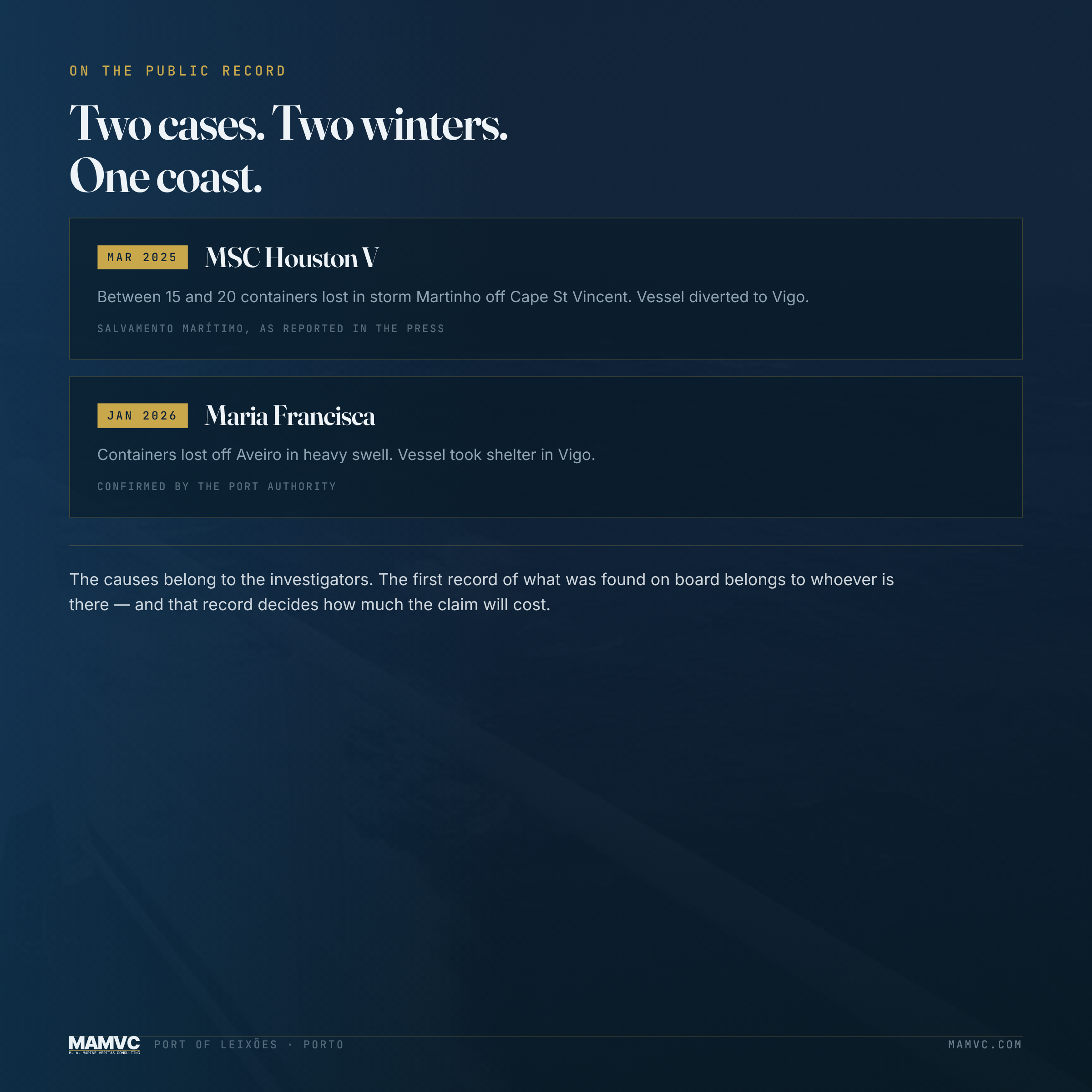
The causes belong to the investigators. The first record of what was found on board belongs to whoever is there, and that record decides how much the claim will cost.
The first record is money.
In one attendance, the crew had already begun restacking damaged units by the time I arrived. A clean separation between pre-existing damage and storm damage turned into a dispute that took months to resolve.
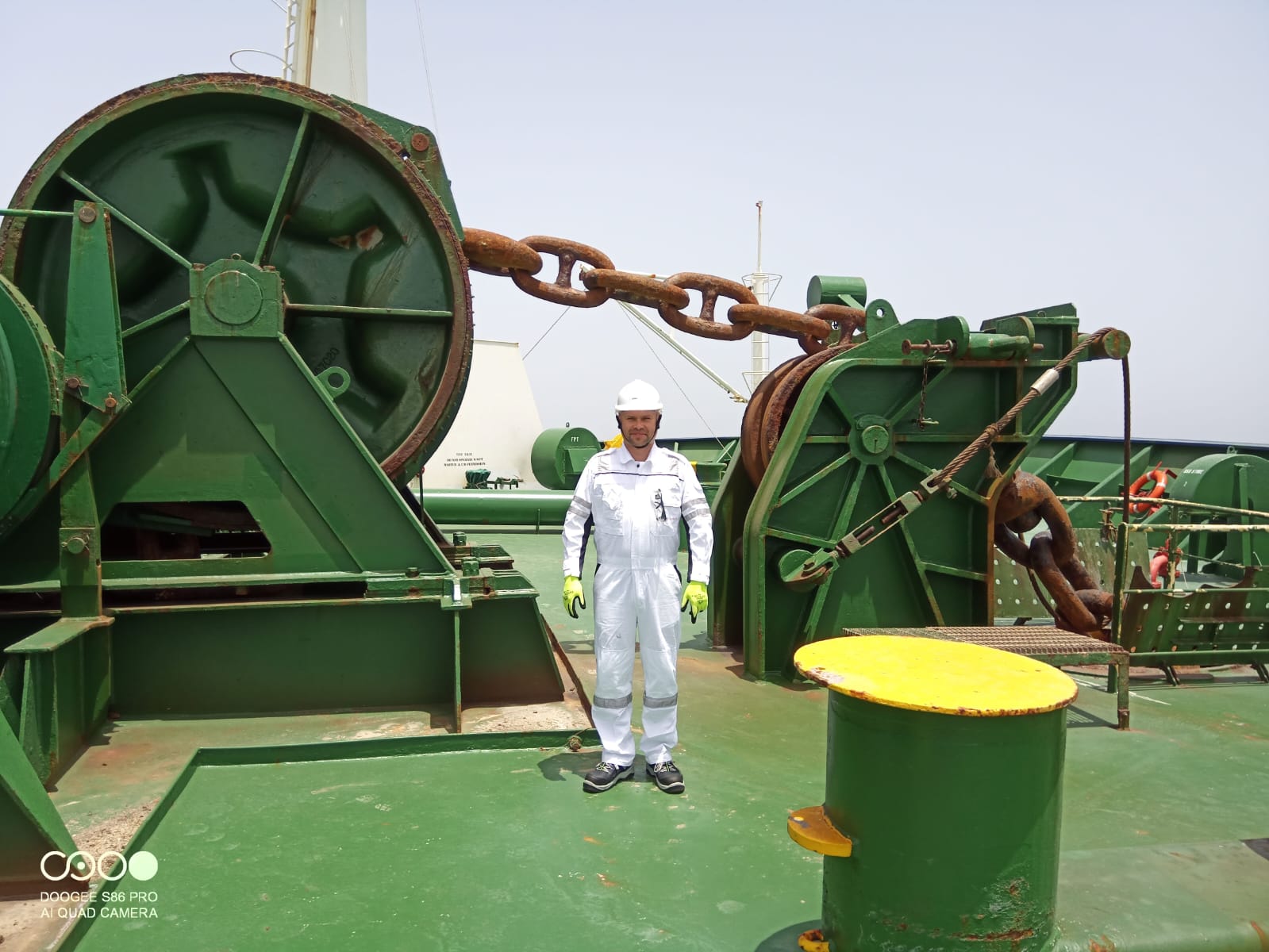
I have worked both sides of this: as senior officer on a car carrier in heavy weather off Halifax, and more recently as a surveyor on a ship in the same Atlantic waters where Martinho hit.

What to preserve in the first hours
By the time an independent surveyor is on board, the first hours are already written. What was captured in them sets the ceiling on everything that follows. These are the eight things worth holding.
- 01Condition of cargo and stow, as found
- 02Sequence of events, with times
- 03Custody at each stage
- 04Weather and sea state, with the source
- 05Photographs and measurements, with place and time
- 06Stowage plan and lashing plan
- 07Loading, securing records and the logs
- 08Statements taken while memories are fresh
Get this right and Clubs, owners, charterers and cargo interests can all work from one file.
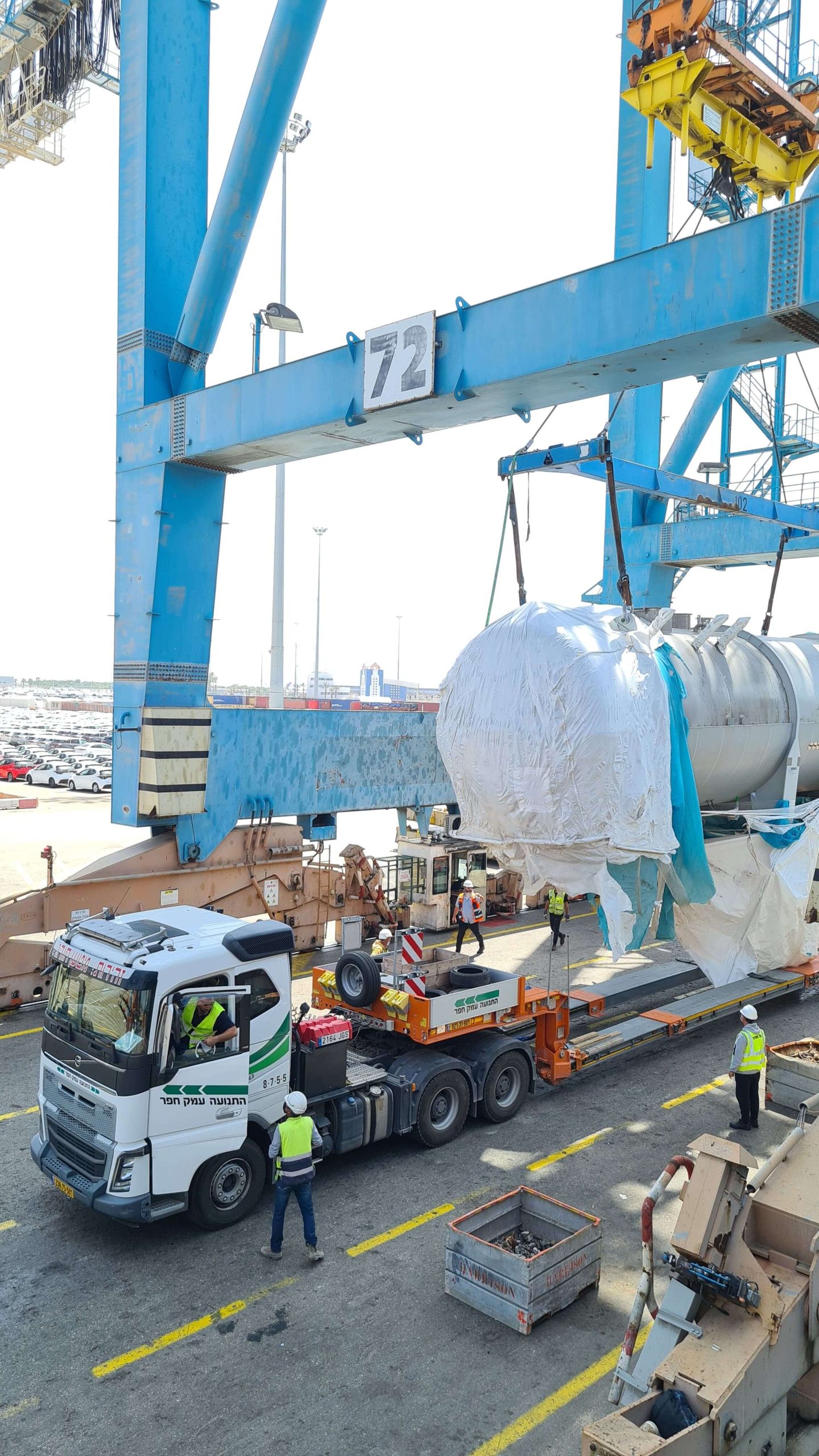
The crew deals with the emergency. The record deals with the facts.
First on scene
The logs, the photographs, the decisions taken while everything is moving at once.
One traceable file
Sequence, times, custody and evidence anyone can trace, written in language every party can read.
The crew’s job is to preserve what the claim will be built on. Writing the claim is a separate job, and keeping the two apart protects the two hours when it matters most.
Experience tells you what a person knows. An incident shows what they do under stress.
Pressure hits capable people. Plan for it.
Three things to settle before the weather turns
Agree who records what
Decide before the voyage.
Rehearse it
A protocol earns its name once the crew has run it.
Know who you call
A number that has been tested in calm weather.
The Atlantic arc
Attendance is mobilised from Porto, which places the whole western approach within reach of a same-day call.
- BilbaoBiscay
- PortoBase · Leixões
- Cape St VincentAlgarve
- GibraltarStrait
Both vessels in the cases above sheltered in Vigo. Both began in the same stretch of water this article is about.
Independent attendance and forensic recording
Cargo, stow and lashings, recorded as found, in order, with evidence any party can trace. For fleet managers, Clubs, owners, charterers and cargo interests across the Atlantic arc.