
Most maritime academy graduates finish their final year with the same thing: a certificate, a stack of textbooks, and a placement they have not yet found. Four years of study. Theory of everything. Experience of nothing that actually happens on a working ship.
The gap between graduating and boarding your first vessel is where careers stall. And the reason they stall is specific: the academy teaches you maritime law, navigation theory, and safety regulations. It does not prepare you for what an officer on a car carrier actually needs you to know on day one. Those are different bodies of knowledge, and most graduates discover that difference after they have already been rejected from three positions they were not ready for.
Dany is a recent maritime academy graduate. His target was a position on a pure car carrier. He arrived with four years of training behind him and no placement in front of him. Three mentoring sessions later, he has the placement. What happened in between is worth looking at in detail.
What the First Session Covered
The first session began with a simple exercise: describe the vessel. Not from a textbook. Out loud, from memory, the way you would explain it to someone boarding for the first time.
This is where most academy graduates run into the first real gap. They know the categories. They have studied the theory. But the specific working vocabulary of the vessel type, the terms their future colleagues will use without explanation, is not there yet.
On a pure car carrier, the quarter ramp is the correct term for what most people call the stern ramp. The quarter ramp is angled at approximately 45 degrees, is a single piece of equipment costing between two and five million euros, and handles weight that creates specific and severe safety requirements. A new crew member who calls it the wrong thing in front of an experienced officer on day one is already at a disadvantage. A new crew member who understands exactly what it is, why it is built the way it is, and what the safety protocols around it mean, has a completely different first impression.
The session worked through the full vocabulary of the vessel. Port side, starboard side, the distinction between the main deck on a car carrier (the deck where the quarter ramp connects) versus the main deck on a bulker or tanker (the weather deck). Accommodation spaces, the wheelhouse, the embarkation ladder versus the gangway. These are not difficult concepts. But they are specific to the vessel type and specific to the working environment, and the academy had not covered them in the detail a car carrier crew would use them.
Safety Procedures That Academy Did Not Cover
PPE came next. The session went through the specific PPE requirements for each common task: rust chipping on the weather deck requires helmet, gloves, safety shoes, coveralls, goggles, earplugs, and knee pads. Work aloft requires a safety harness as the primary item, secured to a confirmed anchor point. The rationale is not abstract. The height above deck on these vessels is approximately twenty-five metres. A fall from that height is not a workplace incident. It is a fatality.
The high-visibility vest is essential for all car deck operations. Standing under a moving quarter ramp, at any point, for any reason, is the kind of mistake a new crew member makes once. The ramp weighs approximately 150 tonnes and operates on wire systems. Wire failure happens. The area under a moving ramp is not a place to be.
Emergency procedures were covered with the same specificity. Why does a crew member report to the muster station during an alarm, rather than responding directly to the emergency? Three reasons: accountability (an officer must confirm all crew are safe and present), instructions (the actual emergency may differ from the drill scenario and require specific duties), and safety (a crew member who moves toward an emergency without instruction can become the second casualty). The protocol for smoke sighting without an alarm follows the same logic: stop work, move to a safe position, report immediately to an officer or bosun. Do not attempt to investigate or address the source alone.
These are the things that keep people alive on their first contract. The academy covers the theory of safety management. The practical application, specific to the vessel type and the actual sequence of actions required, is different. Dany had the theory. The session gave him the practice.
The Placement
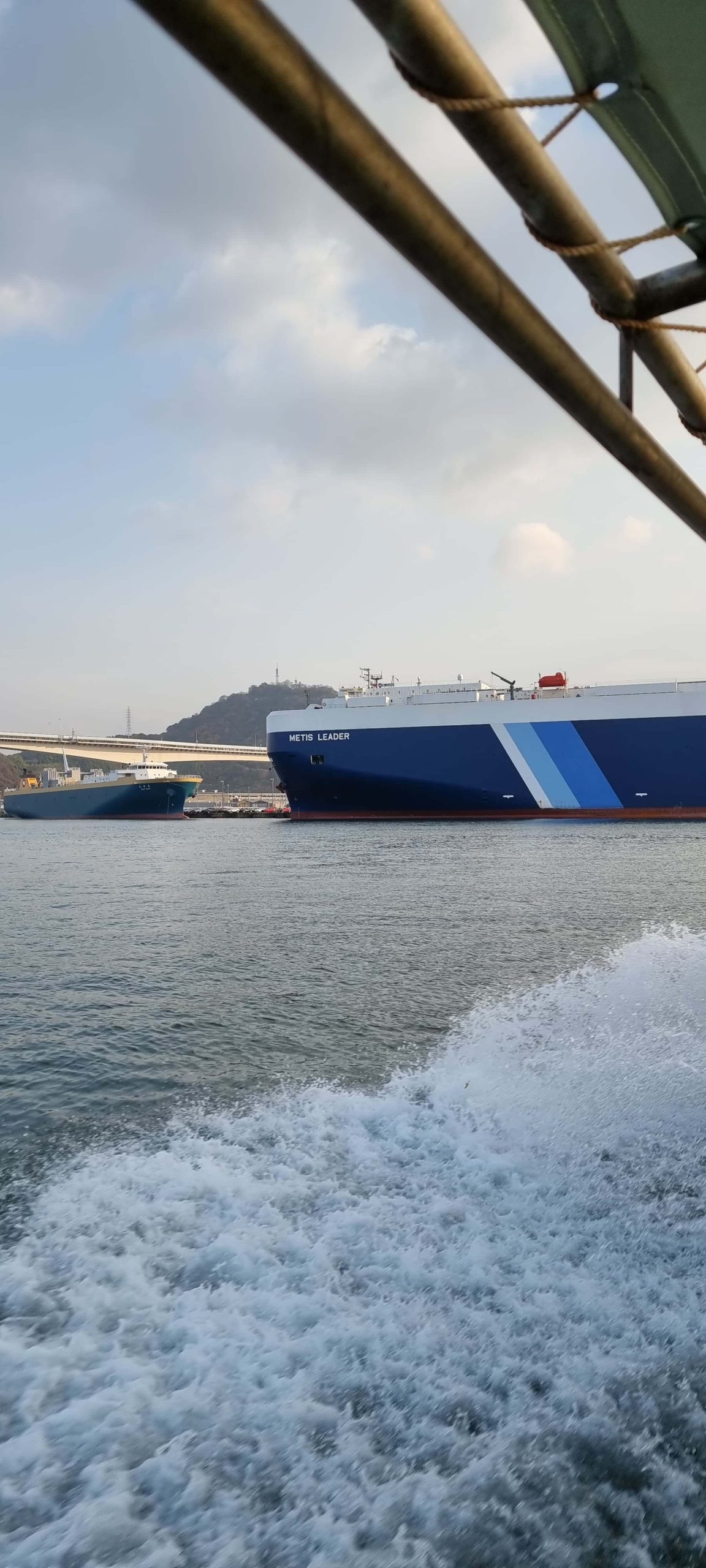
The placement came after the first session. A pure car carrier, the exact vessel type Dany had targeted.
This is the part of the story that requires explaining, because it is not the result of a lucky connection or an unusual circumstance. It is the result of two things working together: a graduate who was prepared to do the work, and access to a network that the academy cannot provide.
Twenty years of maritime command means twenty years of professional relationships with shipowners, operators, crewing managers, and manning agencies. Those relationships do not exist in an academy. They exist in the industry, and they are what make the difference between a graduate with the right certificates and a graduate with the right certificates and a confirmed position.
The programme does not guarantee placements. What it provides is preparation that makes a candidate genuinely ready, combined with direct access to the industry relationships that turn readiness into opportunity. For most graduates, that combination is the one thing missing.
What Dany Said
After the third session, Dany sent a message. Translated from Ukrainian: “Thank you very much. In such a short time I understood more than in four years of study, to be honest. I received the materials from this session and from week one of the programme. Week two I have already looked through. I will go through it properly today.”
Four years of maritime academy gave him the foundation. Three sessions gave him the application.
The Eight-Week Programme
From Theory to First Watch at Sea runs across eight weeks. It is built for maritime academy graduates and deck cadets who have the theoretical background but need vessel-specific preparation, practical procedure knowledge, and the career guidance that connects them to their first contract.
The programme covers vessel-type knowledge specific to the candidate’s target position, practical safety procedures and PPE requirements for the actual work environment, maritime English at the operational level the position requires, industry orientation, and active career support through direct professional network access.
Sessions run one-to-one or in small groups. The format is direct: specific knowledge, immediate application, corrections on the spot. Not recorded lectures. Not self-paced modules. Live sessions where the gaps are found and addressed in real time.
Eight weeks is the structured baseline. The programme extends for candidates who need additional preparation time or who are working toward a more specialist position. The objective in every case is the same: a candidate who is ready for the vessel, the crew, and the work from the first day aboard.
The Gap Is Bridgeable
Maritime academy is valuable. It provides the regulatory foundation, the theoretical framework, and the certification structure that the industry requires. What it cannot provide is the vessel-specific practical knowledge that comes from twenty years of actually being on ships, combined with the professional network that opens the door to the first contract.
That gap is not a failure of the academy system. It is the nature of the transition from education to industry. The question is how long a graduate spends in that gap before finding a way across it.
Dany spent three sessions. He boards his pure car carrier with a preparation level that most first-position candidates do not have, and with a network that will remain useful throughout his career at sea.
If you are a maritime academy graduate preparing for your first sea position, the From Theory to First Watch at Sea covers the transition from academy to active crew in eight weeks. The first step is a 15-minute call.